Archive for February 10th, 2010

Pelosi = BS

No Pelosi

No Pelosi

Years ago when I sometimes used unsavory language, I often used the expression “Bull S***.”

As I grew up a bit and discovered it was not necessary to use such crude language, that expression became “BS.”

What did I really mean when I used those expressions? I meant that something was ridiculous, or idiotic or a half truth or just stupid. It covered any number of negative formats. The dictionary defines it as: nonsense; especially : foolish insolent talk…

I have decided that I no longer will use either of those expressions in the future. When I have a need to express such feelings, I will use the word “Pelosi.”

Let me use it in a sentence. “That’s just a bunch of Pelosi.” I encourage you to do the same. It is such a nasty sounding word, it really packs a punch, we are no longer being vulgar, and it clearly expresses our feelings. If enough of us use it, perhaps the word could be entered into the dictionary.

When on a ranch watch your step and don’t step in the Pelosi. It will get on the bottom of your boot and won’t go away until next election.

What a fitting and descriptive legacy for the Speaker of the House!

PASS IT ON TO AT LEAST 10,000,000 PEOPLE. DO NOT BREAK THIS CHAIN OR YOU WILL GET MORE PELOSI THAN YOU CAN SHAKE A BULL AT.

Tags: , ,

USDA Pretends to Kill NAIS

USDA Signals NAIS is Dead

2/8/2010
Max Thornsberry

After a long-fought six-year battle, independent cattle producers have finally succeeded in stopping the National Animal Identification System (NAIS), which was an onerous plan conceived by the World Trade Organization (WTO) and promoted by the U.S. Department of Agriculture (USDA), domestic and multinational ear tag companies, as well as multinational meat packers and their closely aligned trade associations.

The battle was extremely lopsided. USDA had millions of dollars of taxpayer money — over $140 million to be precise — to develop and promote NAIS and to persuade state departments of agriculture and cattle industry trade associations to recruit as many independent cattle producers as possible into the ill-fated NAIS program. According to the Web site www.usaspending.gov, the National Cattlemen’s Foundation, part of the National Cattlemen’s Beef Association (NCBA), received over $2.1 million from the federal government in 2008 to promote NAIS.

Armed with millions of dollars and six years worth of joint government and processing-industry planning, how did NAIS get stopped?

The answer is that NAIS was stopped by the persistent, relentless pressure applied by a handful of non-conventional organizations that exclusively represented the interests of cattle farmers and ranchers, not the interests of the industrialized sectors of the U.S. beef supply chain. This was a David versus Goliath battle in which David won and the interests of independent cattle producers came out on top.

These recent victories by independent cattle producers, with far less political clout and economic power than their conventional beef industry trade association counterparts, strongly suggests that there remains a genuine reason for hope that independent cattle producers can reverse the present course of their industry — a course that is fast leading toward more and more corporate control over the U.S. cattle industry by beef packers that are capturing control over the live cattle supply chain, just as they have already captured control over both the poultry and hog supply chains.

The beef packers are now focusing their efforts on the feeding sector of the cattle industry by purchasing more and more feedlots (JBS recently purchased the nation’s largest feedlot company, Five Rivers Ranch Cattle Feeding, L.L.C.) and gaining increased control over the fed cattle market through the use of new cattle procurement tools, such as certain marketing agreements and formula-type contracts that effectively reduce the competitiveness of the fed cattle cash market.

As with every major policy issue victory, the real work begins now.

Now that NAIS has been scrapped, a new program needs to be developed to achieve improvements in the United States’ ability to quickly contain and control animal diseases. Independent cattle producers must remain directly involved in the development of this new program to ensure that it does not infringe upon their rights and privileges as did NAIS.

It is encouraging that when Agriculture Secretary Vilsack announced he was going to pursue a new approach to animal disease traceability, he also announced that the U.S. must strengthen its import controls to prevent the introduction of animal diseases at our borders. This is a high priority for independent cattle producers who intrinsically understand that we cannot continue importing diseases like BSE, bovine tuberculosis and brucellosis if we desire to maintain our industry’s reputation of producing the healthiest cattle in the world — a reputation that is the U.S. cattle industry’s competitive advantage in both the domestic market and the global market.

I encourage every cattle producer to take a new look at the relatively new organizations that have amassed uncanny successes for independent cattle producers despite seemingly impossible odds. Each of the organizations that brought us to where we’re at today is not likely to lead us in a new direction. But some of these new organizations will and they need your support to continue winning their fight to restore for the U.S. cattle industry the opportunity for U.S. cattle producers to maintain independent and profitable cattle-producing businesses all across the United States.

The future of the U.S. cattle industry is in your hands and will be determined by which organization you choose to support.

The NAIS that USDA was attempting to force down the throats of independent U.S. cattle producers, utilizing our own tax dollars, would have completely changed the way cattle farmers and ranchers do business.

While obtaining a premises ID number — the first step to a nationwide NAIS — required no effort, the second and third steps in the onerous WTO-mandated system would have been costly, difficult, and, I believe, would have generated rebellion on the range. Reporting the movement of every animal, once it left its birth farm of origin, was a completely unworkable system for producers, especially those operating in our most populous cow states, where the average cowherd size is 30 to 40 mother cows.

Imagine having to get your cattle in a chute, read the tags electronically, and report the numbers to USDA every time you moved a set of calves to another pasture, your Dad’s place, or sent a group of calves to the sale barn. Not only were you going to be required to read the tags electronically, but you were going to be required to report the tag numbers to the appropriate authorities within 48 hours of that movement, or you would be out of compliance and subject to enforcement fines: A range rebellion in the making, and completely unnecessary for a first world country like the United States.

At least for the time-being, the government has listened to the people. A spike has been driven into the heart of a one-world government’s dictatorial rule.

Maybe our Constitution is not dead?

Tags: , , , , , , , , , ,

Beware Amish Heaters

Ed Note:
I have seen these heaters advertised and they look nice, but are pricy. I was surprised that an “Electric” heater would be called an Amish Heater. Too funny.

Buy a Bahams Poster and save a bundle

Buy a Bahama Poster and save a bundle

I have a couple friends that have worked in the factory that assembles them. There are a few Amish employees there assembling them, but no more Amish than you would see at any big employer in the Amish rich counties south east of Cleveland.

These “Amish Heaters” are 1500 watts top, and run about $300. My recommendation is to save your money, go to Walmart or Lowes an buy a1500 watt heater for $19.97, buy a poster of the Bahamas so you can look at it and get the warm feelings that the expensive fake Amish Fireplace would given have you.


Posted on Wed, Feb. 10, 2010

Heater’s Amish glow just a frame job: Minus mantel, the faux fireplace is made in China

By NATALIE POMPILIO
Philadelphia Daily News

pompiln@phillynews.com 215-854-2595

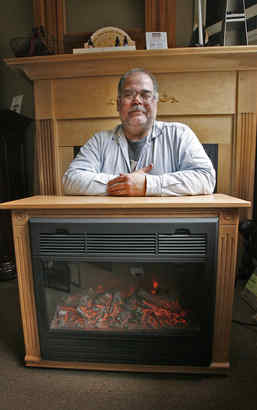
Ads (above) accentuate Ads (above) accentuate the Amish role. Mike Hedgepeth (right) sells the heaters at Hearth & Stove on South Street.

Mike Hedgepeth sells the heaters at Hearth & Stove on South Street.

THE AMISH are known for being honest, God-fearing folk, so if they give a product their stamp of approval, it has to be good, right?

That’s what the people employing them – and their image – are betting on.

For the past two years, America’s newspapers and magazines have been inundated with advertisements for electric fireplaces called Roll-n-Glow, made by a company called Heat Surge.

A recent two-page spread in Parade magazine – designed to look like a series of newspaper articles with photos and sidebars – proclaimed, “Amish craftsmen set to build Heat Surge miracle fireplace mantels for just $58.”

Read that carefully. The Amish make the frame that goes around the unit. The heater – which costs about $250 more – is made in China.

“They’re touting their faux fireplace and wood surrounds, and if those features are important to you, this is one to consider,” said Jim Nanni, manager of the technical department at Consumer Reports, which tested the product last year. “But if you’re just in the market for a portable heater … you can get a decent one for under $100.”

But Heat Surge vice president David Baker said people who buy the Roll-n-Glow – about one million have been sold – aren’t just looking for something to warm their homes.

“This product is a fireplace, not a heater,” Baker said. “Everyone loves a fireplace. It’s also a beautiful piece of furniture. We have a lot of satisfied customers.”

It’s actually a plug-in electric heater with a backlit picture of a fire.

Ads (above) accentuate the Amish role.

Ads (above) accentuate the Amish role.

Baker said the Amish aren’t being exploited, they’re being employed.

He said the company could easily import mantels from China – and charge a lot less – but it wanted to employ craftsmen in their area. And while not all Amish like being photographed, those that do help promote the product that helps feed their families, Baker said.

“Times have changed. A lot of people couldn’t make it anymore in farming,” said Baker, noting that the product has earned a Good Housekeeping Seal. “This has been a godsend to the Amish. They love doing this. It’s woodworking. It’s right up their alley. And they’re employed.”

Heat Surge’s ads contain multiple money-saving promises: “guaranteed to save everyone money on home heat bills this winter,” and “turn down the thermostat and never be cold again.”

But this heater – or any electric space heater – won’t save you money if you employ it as you would a regular heating system, Nanni said. In fact, it could end up costing more overall.

“The savings come from reducing the heat in your entire home and only heating the one or two rooms you’re occupying,” he said. “Everyone is attracted to the lead claim that you’ll save on heating, but you can do that without a portable heater. Lower the heat and put another layer of clothing on.”

A recent version of the ads plays on the guilt that comes with not living the simple life: “Amish hit hard by recession,” reads one faux headline. The “article” under it explains that’s why these simple craftsmen are willing to work hard making those wood mantels for less money.

The photo next to the write-up, with the caption “OUT OF WORK,” shows a young boy and a man wearing traditional Amish garb holding hands and walking toward a covered bridge. The boy is glancing over his shoulder.

The content doesn’t bother Steve Nolt, a professor at Goshen College specializing in Amish and Mennonite history and culture. The Amish have had their name and image used before to market products, including for items that are as Amish as Quaker Oats are Quaker, he said.

“If the Amish image would be used in a way that hurts Amish people or is detrimental to their culture, I would be upset,” Nolt said. “In this case, I’m more amused than offended.”

Nolt, who is on sabbatical in Lancaster County, said the Amish folk he’s talked with say it’s clear from the ad that the people pictured are not Old Order Amish. They can tell by the older gentleman’s trimmed beard and details like the style of the man’s hats and the ladies’ bonnets.

But they’re not offended, he said. Like him, they’re somewhat amused. Before the ad copy was cleaned up to make clear that it is the mantel, not the heating unit, that is Amish-made, one Lancaster man joked, “Are they Amish heaters? Well, let’s see, how many Amish live in China?”

The Canton, Ohio, office of the Better Business Bureau gives Ohio-based Heat Surge a “B-“grade and said it is not a BBB-accredited business. More than 300 complaints about the company have been filed since June 2007, but most major issues have been settled, said Amanda Tietze, Canton BBB’s vice president of public relations.

“The company has been willing to work with us to resolve any issues or problems or patterns,” Tietze said.

Locally, the heaters – and their mantels – can be purchased at Hearth & Stove on South Street near 17th. Seen in person, the units appear smaller than advertised, standing only 2 feet high.

“Everybody says that,” owner Dan Carter said.

The acclaimed mantel – Carter has “oak” on display in his shop – is passable. Although Consumer Reports didn’t set out to analyze that part of the product, Nanni called the “oak” version “acceptable.”

“I wouldn’t call it exquisite craftsmanship,” Nanni said. “It’s not made as fine furniture.”

The “miracle” faux flame is just that: Fake. But in the “testimonial” section of Heat Surge’s Web site, customers marvel at how real the flame looks and how serene it can make one feel. There’s no mention of how they feel when they have to change the lightbulb that produces that effect.

The item sells well and “has a nice price point,” being in the $300 to $500 range, depending on what deals the company is offering, said Hearth & Stove’s Carter. He has literature detailing how a user can save money by only heating occupied rooms with the Roll-n-Glow, practicing zone heating over traditional heating.

“It’s a portable space heater,” Carter said. “If that’s what you want, that’s what you’ll get.”

He knows the company spends a lot of money on its ads, but he doesn’t think buyers are being misled.

“Nobody’s going to think the Amish are making electric fireplaces,” he said. “They’re not supposed to even have electricity.”

Tags: ,